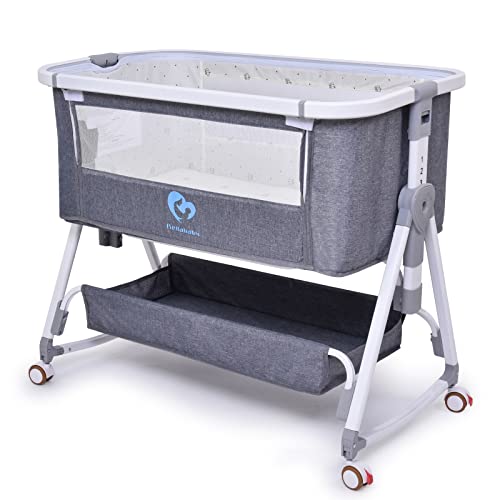
Understanding Co-Sleeper Cribs: A Comprehensive Guide for New Parents
In the ever-evolving landscape of infant sleep solutions, co-sleeper cribs have actually gathered substantial attention amongst new parents. These specialized cribs offer a distinct bridge between co-sleeping and safe sleep practices, offering advantages that resonate with both caregivers and infants. Bedside Sleeper digs into the complexities of co-sleeper cribs, detailing their features, benefits, factors to consider, and answering common concerns to direct parents in making a notified decision.
What is a Co-Sleeper Crib?
A co-sleeper crib, likewise referred to as a bedside sleeper, is a type of crib developed to safely attach or sit next to an adult bed. It permits infants to sleep near their parents without the threats traditionally related to adult bed-sharing. These cribs come in different styles, however a lot of share a crucial function: one side that is lower, making it possible for easy reach to the baby while keeping them in their own designated sleeping space.
Key Features of Co-Sleeper Cribs
- Safe Attachment: Designed to firmly connect to the adult bed, ensuring stability.
- Adjustable Height: Height customization options for seamless placing beside the adult bed mattress.
- Breathable Mesh Sides: Often equipped with breathable mesh sides to enhance air flow.
- Compact Design: Takes up less space than conventional cribs, making them ideal for small spaces.
- Portable Options: Many co-sleeper cribs are light-weight or foldable, enabling easy motion and travel.
Advantages of Using a Co-Sleeper Crib
Co-sleeper cribs present numerous benefits that appeal to new parents, consisting of:
- Enhanced Bonding: Proximity promotes bonding and can relieve nighttime feedings and reassuring.
- Simplified Nighttime Feeding: Parents can easily feed or soothe their baby without requiring to get out of bed.
- Reduced Risk of Bed-Sharing Hazards: Co-sleepers produce a safer environment than traditional bed-sharing, lowering the risk of suffocation and falls.
- Motivation of Independent Sleep: Infants have their own sleep space, which promotes independent sleeping habits.
Factors to consider When Choosing a Co-Sleeper Crib
While co-sleeper cribs use numerous advantages, there are also numerous factors to consider that parents ought to assess before purchasing:
- Safety Standards: Always guarantee that the crib complies with present safety policies offered by companies such as the Consumer Product Safety Commission (CPSC).
- Size Compatibility: Measure the adult bed to guarantee the co-sleeper will fit safely and easily along with it.
- Reduce of Use: Look for models that assist in easy operation and accessibility, particularly during nighttime.
- Convertible Options: Some co-sleepers use the versatility to convert into a conventional crib once the child outgrows them, which can be a cost-efficient option.
Leading Co-Sleeper Cribs on the Market
To assist browse the abundance of choices readily available, here's a table showcasing some popular co-sleeper cribs together with their standout features:
| Brand | Model | Functions | Rate Range |
|---|---|---|---|
| Arm's Reach | Ideal Arc Crib | Adjustable height, detachable side | ₤ 150 - ₤ 230 |
| Babybay | Initial Co-Sleeper | Made of sustainable wood, includes mattress | ₤ 240 - ₤ 300 |
| Chicco | Next2Me Magic | Easy side access, foldable design | ₤ 200 - ₤ 280 |
| Snuggle Me | Organic Co-Sleeper | Soft, comfortable contours; portable | ₤ 120 - ₤ 180 |
| HALO | BassiNest | 360-degree rotating, height-adjustable | ₤ 250 - ₤ 350 |
Tips for Using a Co-Sleeper Crib
- Positioning: Place the co-sleeper next to the bed at the exact same height level for safety.
- Follow Safe Sleep Practices: Ensure the crib is established according to standards to decrease threats. This consists of preventing loose bed linen and keeping the bed mattress firm.
- Routinely Check Security: Periodically check the attachment between the co-sleeper and the adult bed to ensure it stays safe and secure and stable.
Frequently Asked Questions (FAQs)
1. Are co-sleeper cribs safe?Yes, when
utilized according to the producer's guidelines and security standards, co-sleeper cribs are thought about a safe alternative to traditional bed-sharing.
2. How long can my baby use a co-sleeper crib?Most co-sleeper cribs are created for infants up to 5-6 months old, however examine individual product specs for age and weight limits. 3. Do co-sleeper cribs come with mattresses? Attachable Bedside Crib -sleeper cribs include included bed mattress, however validate this before purchase. Guarantee any additional mattress meets safety requirements. 4. Can a co-sleeper crib be used for twins?There are co-sleeper cribs designed for twins, but these models may be less common. Constantly inspect the size and weight limits. 5. Must I use a co-sleeper crib for naps?Absolutely! Co-sleepers work well for both nighttime sleeping and naps, supplying a constant sleep environment for infants. Co-sleeper cribs use an effective and safe compromise
for new parents eager to keep their infant close while maintaining a protected sleeping environment. By comprehending their features, benefits, and
safety considerations, parents can make informed choices that accommodate their family's needs. Whether you're searching for convenience throughout nighttime feedings or a way to build a strong early bond, a co-sleeper crib might just be the right choice for you and your youngster.